How to Read a Vet Estimate: Urgent, Optional, and Shop-Around Lines
Sort any vet estimate into do-now, can-wait, and shop-around lines — and keep an $8,000 bill honest.
Read the guide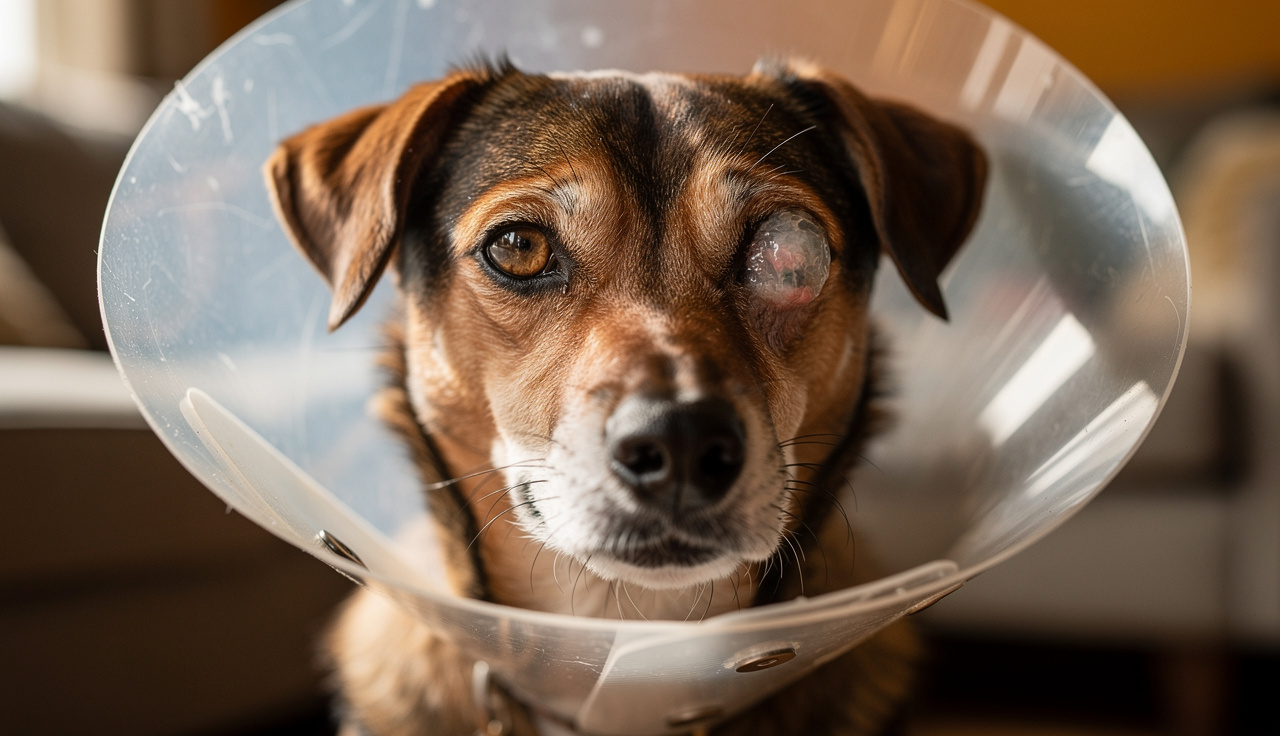
A simple corneal ulcer in a dog is usually a $150–$250 problem in 2026 — exam, a fluorescein stain test, medication drops, and a recheck — and it stays cheap only if it is treated the same day it appears. An ulcer that deepens or becomes infected can escalate to surgery at $1,500–$3,500 at an ophthalmologist. Eye problems are same-day problems. Prices vary by region and clinic.
| Item | 2026 US range |
|---|---|
| Exam plus fluorescein stain | $75–$200 total visit |
| Medication eye drops | $25–$60 |
| Recheck with re-staining (5–7 days) | $50–$100 |
| Ophthalmology exam | $150–$300 |
| Conjunctival graft surgery | $1,500–$3,500 |
| Enucleation (eye removal) | $800–$1,800 |
A corneal ulcer is a scratch or defect in the clear surface of the eye. The cornea is thin — thinner in some breeds than others — and it sits over the fluid-filled chamber of the eye. A defect in it is both painful and a doorway for infection.
Signs to watch for:
Any of these is a same-day call. A dog that is suddenly squinting and holding one eye shut should not wait until the weekend is over.
The core diagnostic is a fluorescein stain — a dye applied to the eye that temporarily colors damaged cornea bright green under a blue light. It takes minutes and shows exactly where and how large the defect is. The eye is also examined for foreign material, eyelid abnormalities, and other contributing problems.
Some ulcers are caused or worsened by an underlying issue: a rolled eyelid, a lash abnormality, dry eye, or a facial nerve problem that prevents blinking. Those are looked at during the same visit.
A healing ulcer is proven by re-staining, not by how the eye looks from across the room. A dog can look more comfortable while an ulcer is still present, or look comfortable while it is quietly getting worse under a hazy surface. The five-to-seven-day recheck with another stain is how the veterinarian confirms the defect is closing.
Skipping the recheck is the most common way a manageable ulcer becomes a surgical case.
Ulcers do not all behave the same. Most superficial ulcers heal in five to ten days with appropriate treatment. Some deepen or become infected, and those require escalation.
An Elizabethan collar — the cone — is not there to be inconvenient. One rub with a paw can rupture a thin, compromised cornea. The difference between a healing ulcer and a ruptured eye is often a five-second rub. Keep the cone on for the entire period the veterinarian specifies, including at night, and including when the dog seems fine.
Do not use leftover steroid eye drops from another pet. This is the single most important warning on this page. Steroids suppress the immune response and inhibit healing, and on a corneal ulcer they can allow the cornea to melt through. A drop that was appropriate for a different condition, in a different dog, at a different time, can cost an eye. If a bottle of eye drops is in the house and the label says “steroid,” “dexamethasone,” “prednisolone,” or “neomycin-polymyxin-dexamethasone,” do not put it in an eye that has not been examined.
Other things to avoid:
Dogs with prominent, bulging eyes — pugs, Boston terriers, French bulldogs, Pekingese, and similar — have more exposed cornea and a higher risk of injury. So do dogs with eyelid abnormalities or dry eye. These dogs merit a low threshold for getting an eye checked, because their anatomy turns a small scratch into a big problem faster.
Go to a veterinarian immediately — emergency care after hours — for: sudden squinting with a cloudy or blue eye; a visible defect or divot on the eye surface; a dog that will not open the eye at all; marked swelling or bulging; blood in the eye; a sudden change in vision; or any eye problem in a dog with only one eye. Do not wait for a scheduled appointment with an eye that is clearly painful.
General information about typical costs. This is not veterinary advice, and this page does not recommend or dose any medication. Eye problems require an in-person examination to diagnose. Do not use prescription eye drops intended for another animal or another condition. If your dog is squinting or holding an eye closed, contact a veterinarian today.
Sort any vet estimate into do-now, can-wait, and shop-around lines — and keep an $8,000 bill honest.
Read the guideClippers, grinder, styptic, and the little-and-often rule — plus when to let a pro do it.
Read the guideClinic $20-40, groomer $15-30, mobile $30-60 — the 2026 price map and the yearly math.
Read the guideThe fill, massage, shake, wipe method — and the ears you should never clean yourself.
Read the guideCats rarely need it — and dirty-looking ears are usually mites, which is a vet visit.
Read the guideBrushing and VOHC-seal chews work. Antlers and most powders are marketing.
Read the guideAnesthesia is not an upsell. How to read a dental estimate line by line.
Read the guideTooth resorption is the cat money pit — X-rays find it, extraction treats it.
Read the guideCore vs lifestyle vaccines, typical prices, and where low-cost clinics charge $10-20 a dose.
Read the guideFVRCP and rabies are core. Indoor cats need less — here is the honest schedule talk.
Read the guidePremiums, deductibles, and the pre-existing clause that decides most claims — run the numbers.
Read the guideCompare foods by cost per day, not per bag — worked examples from kibble to fresh.
Read the guideWhen a prescription diet is the treatment, and the questions to ask when it is not.
Read the guideCalorie math, measured portions, and free exercise beat expensive diet products.
Read the guideBloodwork and generic pain meds do the heavy lifting — where senior-dog money works hardest.
Read the guideThyroid, kidney, diabetes — the big three senior-cat diseases and what managing each costs.
Read the guideER exam, X-ray, surgery, and hospitalization ranges for 2026 — know the numbers before the crisis.
Read the guideStabilize and transport: the do list, and the dangerous moves to never make.
Read the guideShelter clinics, vet schools, payment plans, and aid funds — where cheaper care actually is.
Read the guideOne real study, 15 dogs, a $380-a-month dose — and a $40 bag of powder that cannot match it.
Read the guideThe AAFCO line matters most. Ingredients by weight, the grain-free question, and label facts vs marketing.
Read the guideDirect answer: In 2026 in the U.S., a dog spay at a private veterinary clinic typically runs $250–$600, and a neuter runs $150–$400. Low-cost spay/neuter cli...
Read the guideDirect answer: In 2026 in the U.S., a cat spay at a private clinic typically costs $150–$300, and a neuter costs $50–$150. Low-cost clinics often charge $35–...
Read the guideDirect answer: In 2026 in the U.S., a dog or cat microchip implant typically costs $25–$75 at a veterinary clinic. Shelter and clinic events often charge $10...
Read the guideDirect answer: In 2026 in the U.S., a full dog groom typically costs $40–$90 depending on size and coat, while a bath-only appointment runs $30–$60. Large do...
Read the guideDirect answer: In 2026 in the U.S., traditional dog boarding typically costs $30–$55 per night. Pet hotels and luxury boarding run $60–$125 per night, in-hom...
Read the guideDirect answer: In 2026 in the U.S., a 30-minute drop-in pet-sitting visit typically costs $20–$35. Two visits per day are common for cats, which can run $40–...
Read the guideDirect answer: In 2026 in the U.S., a realistic first-year budget for a puppy is about $1,300–$3,000 before emergencies. That includes vaccines and exams, sp...
Read the guideDirect answer: In 2026 in the U.S., a realistic first-year budget for a kitten is about $800–$2,000. That covers exams and vaccines, FeLV testing, spay or ne...
Read the guideDirect answer: In 2026 in the U.S., group dog training classes typically cost $100–$300 for a 4–8 week course. Private lessons run $50–$150 per hour or $400–...
Read the guideMost dog owners facing a torn cranial cruciate ligament (CCL) should plan on $3,500 to $6,500 per knee for TPLO surgery at a 2026 specialty or referral cente...
Read the guideCataract surgery by phacoemulsification typically runs $2,700 to $4,500 for both eyes in 2026 at a boarded veterinary ophthalmologist, with some practices pr...
Read the guideIn 2026, a set of X-rays runs $150 to $400, an abdominal ultrasound $300 to $600, an echocardiogram $400 to $700, a CT scan $800 to $1,500, and an MRI $2,500...
Read the guideLegitimate allergy testing costs $200 to $400 for a blood (serum) panel and $300 to $600 or more for intradermal skin testing at a veterinary dermatologist i...
Read the guideThe highest-return arthritis intervention for most dogs costs nothing: getting the dog to a lean body condition. A fat arthritic dog on a measured diet impro...
Read the guideIn 2026, flying with a pet in the cabin costs $95 to $200 each way depending on the airline, with one pet per passenger and carrier size limits that quietly ...
Read the guideIn 2026, communal cremation — no ashes returned — typically costs $50 to $150. Private cremation, in which only your pet is cremated and the ashes come back,...
Read the guideMost dogs need a bath about once a month, or when they are visibly dirty or smelly — that is plenty. Overbathing strips the skin's oils and can cause the ver...
Read the guideThe single largest savings lever in pet medication is one most owners never use: many veterinary prescriptions are human generics. Gabapentin, many antibioti...
Read the guideWhat a dog ear infection actually costs in 2026 — exam, cytology, medication, and the recheck that decides whether it is really gone.
Read the guideHot spots and skin infections: what the vet visit, testing, and medication run — and why treating only the surface costs more over a year.
Read the guideA blocked male cat is a true emergency. The signs, what unblocking and hospitalization cost, the surgery option, and prevention math.
Read the guideOne vomit is usually nothing; some vomiting is an emergency. The triage signs that separate a quiet night at home from a $3,000 vet bill.
Read the guideWhat pet blood panels cost in 2026, what they detect early, and what they honestly cannot tell you — including the cancer-screening myth.
Read the guideDental extractions priced honestly: simple vs surgical, why X-rays find the real disease, and when the specialist root-canal fork appears.
Read the guideFour treatment routes for a hyperthyroid cat, with the lifetime math: daily pills, prescription diet, the one-time radioactive iodine cure.
Read the guideCushing's testing and treatment priced out — the diagnostic rounds, monthly medication, and the monitoring costs owners are not quoted up front.
Read the guideWhat pet rehab sessions cost, where the evidence is strongest, and how a vet-designed home program gets much of the benefit for less.
Read the guideBack-disc disease in dogs: signs by severity, strict crate rest vs surgery pricing, the urgency rule, and the hidden costs of each route.
Read the guideWhat a diabetic cat costs per year — insulin, diets, monitoring options — and the real chance of remission that changes the effort math.
Read the guideWhat euthanasia costs at a clinic vs at home, what the appointment involves, and how planning ahead is both kinder and cheaper.
Read the guideHealth certificates priced: the $50 domestic version vs the international process with USDA endorsement, rabies timing, and titer tests.
Read the guideDog licenses cost $10-30 a year; the fines for skipping run ten times that. What licensing requires, funds, and how discounts work.
Read the guideOur evidence column takes on dog probiotics: the strains with real studies, the labels that cannot back their claims, and the biscuit test.
Read the guide